
30th AOC |Focusing on Fundamentals
Melbourne | 20–23 May 2026
PROGRAM OUTLINE
From 20–23 May 2026, Melbourne will host the 30th Australian Orthodontic Congress. This milestone event for our profession is a timely opportunity to reconnect with the foundations that define excellence in orthodontic care.
This year’s theme, “Focusing on Fundamentals”, reflects something deeply relevant to contemporary practice. At a time when digital workflows, artificial intelligence, aligner systems, and interdisciplinary demands are evolving at pace, this Congress invites us to revisit the principles that underpin predictable, stable, and ethical orthodontic treatment. It is a program designed not only to inform, but to challenge, recalibrate, and inspire.
A World-Class Scientific Program
The 2026 Congress features an exceptional lineup of international and Australian speakers who represent the forefront of research, biomechanics, interdisciplinary care, and patient-centred practice.
Among the international keynote speakers are:
• Prof Lucia Cevidanes (USA)
• Dr Renato Cocconi (Italy)
• Prof Ama Johal (UK)
• Prof Bernd Lapatki (Germany)
• Prof Ambra Michelotti (Italy)
• Prof Sabine Ruf (Germany)
The formal program begins with the Official Opening Ceremony on Thursday morning, followed by the prestigious Steven Seward Lecture delivered by Dr Renato Cocconi on digital planning in complex interdisciplinary cases. From that moment forward, delegates will experience three days of rigorous, clinically relevant, and forward-thinking content.
Across the program, themes include:
• Advanced biomechanics and TAD applications
• Orthodontic-periodontic interface and ‘red flag’ cases
• TMD and bruxism implications for orthodontists
• Enamel demineralisation and preventive strategies
• Space closure versus prosthetic rehabilitation and quality-of-life considerations
Friday’s Arthur Thornton Taylor Lecture sees Prof Sabine Ruf explore predictive factors in successful Class II treatment, while additional sessions examine retention from the patient perspective, responsible and efficient use of CBCT, practical AI implementation in daily practice, paediatric OSA, dental sleep medicine, and contemporary TMD management.
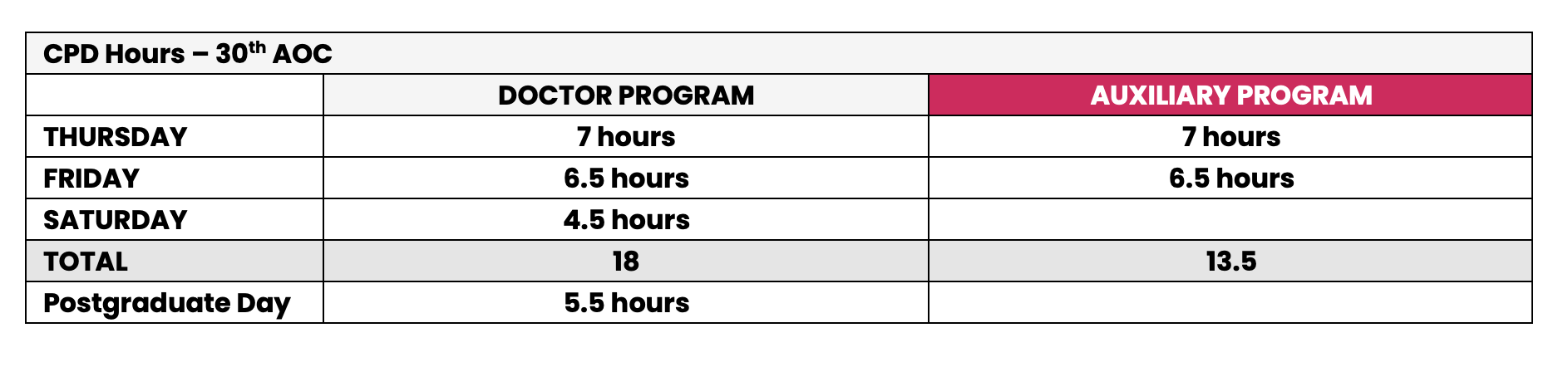
Saturday’s Doctors Only program culminates in the distinguished PR Begg Lecture by Prof Bernd Lapatki on force and moment application in orthodontic tooth movement. This represents a powerful return to biomechanical fundamentals. The day continues with sessions on AI at the chairside, functional appliance decision-making, digital face-driven surgical planning, TMJ perspectives, and a Future of Orthodontics Panel.
This is a program carefully curated to ensure delegates leave with immediately applicable clinical insights, as well as broader strategic thinking about the direction of our specialty.
AUXILIARY PROGRAM OUTLINE
The auxiliary programme, held across Thursday and Friday, will feature a comprehensive range of clinical, professional and workplace-focused topics designed to support orthodontic teams in their day-to-day practice. Sessions will cover areas such as compliance and consent, mental health first aid, harmony in the workplace, IT safety, interdisciplinary treatment, periodontics, prosthodontics, endodontics and trauma, artificial intelligence, clinical practice, and strategies for managing high-conflict patients.
A strong emphasis will be placed on team wellbeing and effective workplace culture. A/Prof Roisin McGrath will present Promoting Wellbeing in the Orthodontic Team, while Dianne Watt’s Humble Enough to Learn, Hungry Enough to Grow – Why Curiosity and Teamwork Matter More Than Talent and Experience explores the importance of curiosity, collaboration and professional growth. Grevis Beard will address workplace dynamics in The Top Twelve Team Dysfunctions – and How to Fix Them and How to Effectively Manage High Conflict Personalities in Your Workplace, providing practical tools to strengthen team cohesion and communication.
Clinical education remains a central focus, with sessions including Prevention and Management of Enamel Demineralisation (A/Prof Mani Ekambaram), Molar Hypomineralisation: Interdisciplinary Decision-Making and Orthodontic Implications (Dr Alan Tran), and Emergency to Endodontics – A Simplified Team-Based Approach to Managing Traumatic Dental Injuries (Prof James Brichko). The Perio–Ortho Interphase will be explored by Dr Andrei Locke, while Dr Chee Chang will present Interdisciplinary Cases / Collaborating with Orthodontists, highlighting the importance of coordinated care between practitioners. Communication strategies that improve patient cooperation and outcomes will also be discussed in Simple Language Shifts That Impact Pain, Cooperation and Compliance by Dr Anna Englin.
The programme will also address emerging technologies and professional responsibilities, with Practical AI in Orthodontic Practice – Supercharging Your Clinic presented by Dr Nimesh Piyatissa and Risk, Reality and Responsibility – What You Really Need to Know to Stay Safe Online by Susan McLean. Important public health updates will also be covered, including Australian Oral Cancer in the 21st Century – Is Anything Changing? presented by Prof Michael McCullough.
Several sessions will bring orthodontists and oral health practitioners together for joint learning, reflecting the collaborative nature of contemporary orthodontic care. These include The Conversion Code: Understanding Behavioural Triggers that Drive Commitment presented by Bernard Salt AM, as well as clinical sessions such as TMD and Orthodontics (Prof Ambra Michelotti), Paediatric OSA: What’s Clear, What’s Contested, and Why Collaboration Matters (A/Prof Jasneek Chawla), and Dental Sleep Medicine: Making an Impact on a Patient’s Quality of Life (Prof Ama Johal).
Professional risk and responsibility will also be explored in Dental Indemnity, Braces and Dark Places presented by Dr Gerard Clausen. The programme will also feature the prestigious Steven Seward Lecture, delivered by Dr Renato Cocconi, titled Digital Planning of Complex Cases: From Orthodontics to Interdisciplinary Dentistry, highlighting advances in digital planning and interdisciplinary treatment for complex cases.
Together, these sessions create a balanced programme that combines clinical updates, practical workplace strategies and forward-looking insights, while fostering collaboration between orthodontists and oral health practitioners to enhance patient care and practice outcomes.